The secret is self-funding
When a large company self-funds, there's no premium going to a carrier's profit margin. The company pays the actual cost of its employees' care, plus a fee to an administrator (often the same carriers, acting as administrators). It keeps every dollar of savings, sees its own claims data and can design the plan however it wants under federal ERISA rules.
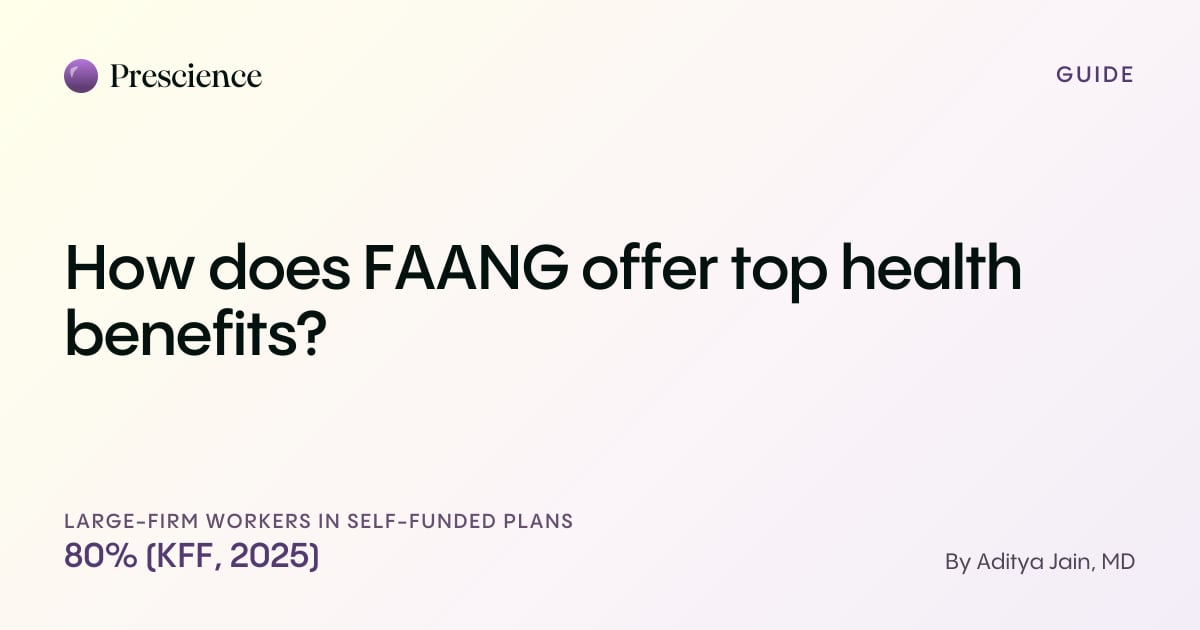
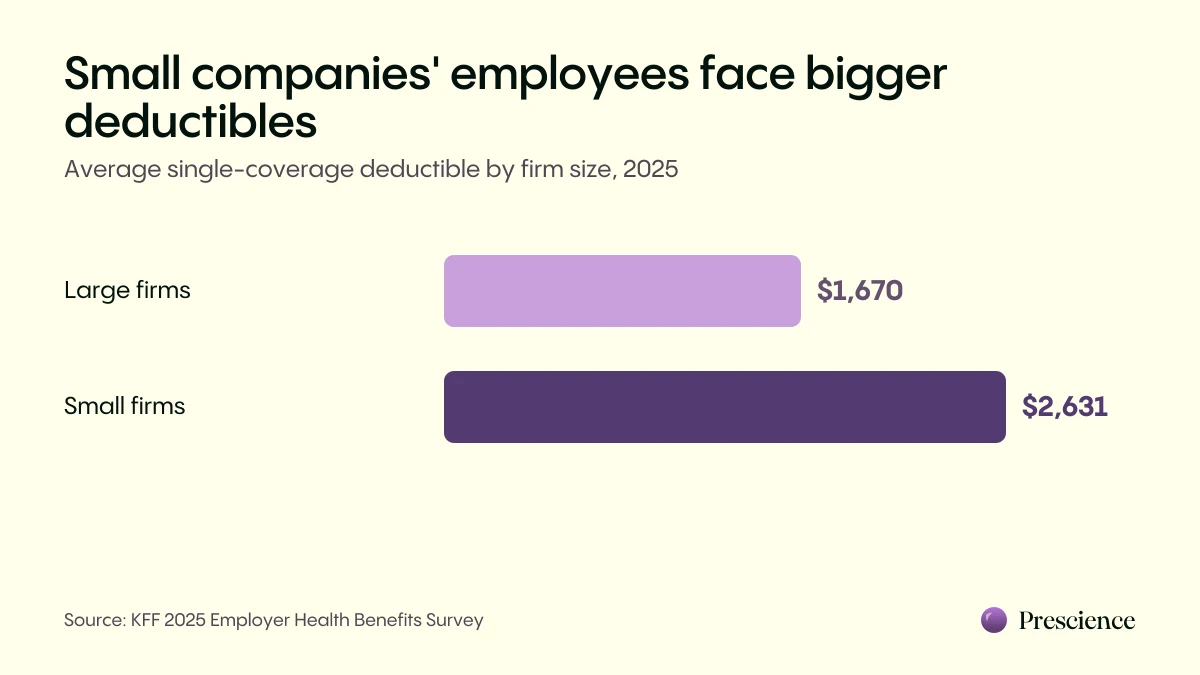
KFF's 2025 survey shows the gap clearly: 80% of covered workers at larger firms are in self-funded plans, compared with 27% at firms with 10–199 workers. The average deductible at larger firms was $1,670; at small firms, $2,631.
What large employers layer on top
- Low deductibles and out-of-pocket maximums, because the savings from self-funding go back into the plan.
- Navigation and advocacy so employees get to the right doctor the first time.
- Direct contracts and centers of excellence for expensive procedures, at negotiated prices.
- Coverage choices smaller plans skip. KFF found 43% of firms with 5,000 or more workers cover GLP-1 drugs for weight loss.
Why startups usually can't copy it
Self-funding works at scale because thousands of employees average out. A 20-person company can have one premature birth or cancer diagnosis that costs more than its whole expected year. Small employers who self-fund buy stop-loss insurance to cap that risk, but stop-loss carriers underwrite your group, and some states restrict it: New York bans stop-loss for small groups entirely.
When I was at Harvard Medical School, I watched residents on rounds step around broken workflows and mutter that someone should really figure this out. It's a big part of why I didn't apply to residency. Health benefits for small companies felt the same way to me: everyone knew the big-company model worked better, and nobody had made it work for a team of 20.
How a startup can get the FAANG model
We built Prescience so a 10- or 50-person company can offer the kind of plan big tech offers.
At Prescience, we design and run your company's health plan, from setup and enrollment to claims, compliance and COBRA. What your team gets:
- An effective $0 deductible, so the plan helps from the first visit.
- Simple copays shown before a visit, capped by a low out-of-pocket maximum.
- A broad national PPO network, plus providers we contract with directly.
- 24/7 physician-led care navigation: a care team that finds the right provider, books appointments and explains costs up front.
What your company gets: one monthly cost set in your quote, usually 10–20% below comparable fully insured coverage and fixed before the plan starts, with no admin fees. You keep your payroll provider, and the plan can start mid-year.
The result is the plan design big companies offer, an effective $0 deductible, a low out-of-pocket maximum and real help using care, at a cost fixed in your quote.
See what your team would pay with Prescience
Answer a few questions about your team and get a quote in about 60 seconds, or talk it through with one of our benefits experts.