What candidates actually notice
When an engineer leaves a large tech company for your startup, they compare four things: what comes out of their paycheck, the deductible, the out-of-pocket maximum and whether their doctors are in network. Perks like wellness stipends barely register next to a $3,000 deductible.
- $0 employee premium. Nothing comes out of the paycheck for their own coverage.
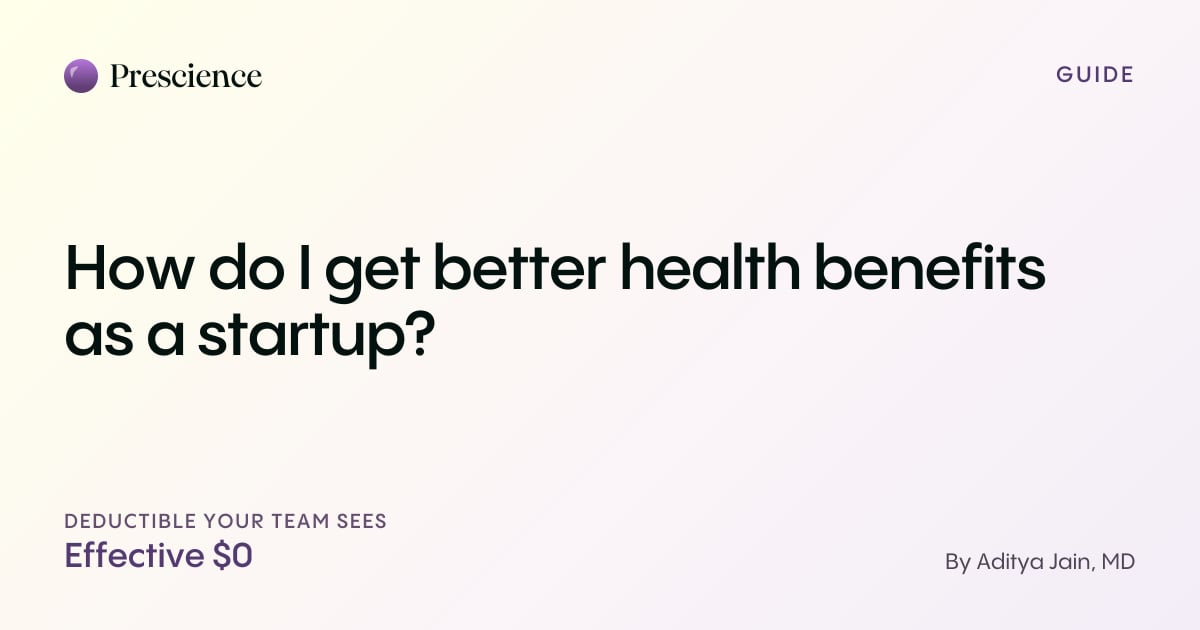
- A low or effective $0 deductible. The plan helps from the first visit.
- A low out-of-pocket maximum. The worst case is a number they can live with.
- A broad network. Their current doctors are in it.
- Someone to call. A real care team, not a carrier phone tree.
Why startup benefits usually lag
Most startups buy benefits through a PEO or a carrier's small group plan. Both price you with a pool of other companies, and both make more money when premiums rise. Founders show us PEO renewals of 40% or more once introductory pricing ends. To hold the budget, companies push employees into higher deductibles, which is exactly what candidates notice.
Large employers avoid this by self-funding: they pay claims directly and keep the savings. I explain how in How does FAANG offer top health benefits?
A plan design that competes with big tech
Plan design varies by company, but a typical Prescience plan looks like this:
| Typical PEO or small group plan | Typical Prescience plan | |
|---|---|---|
| Employee premium | Often a paycheck deduction | $0 available |
| Deductible | Often $1,500–$3,000+ | Effective $0 |
| Coinsurance | Often 20% | 0%, with upfront copays |
| Individual out-of-pocket maximum | Often several thousand dollars | Typically $1,000 |
| Network | Carrier PPO or HMO | Broad national PPO plus direct-contract providers |
| Care support | Carrier phone line | 24/7 physician-led care navigation |
How to pay for it
At Prescience, we design and run your company's health plan, from setup and enrollment to claims, compliance and COBRA. What your team gets:
- An effective $0 deductible, so the plan helps from the first visit.
- Simple copays shown before a visit, capped by a low out-of-pocket maximum.
- A broad national PPO network, plus providers we contract with directly.
- 24/7 physician-led care navigation: a care team that finds the right provider, books appointments and explains costs up front.
What your company gets: one monthly cost set in your quote, usually 10–20% below comparable fully insured coverage and fixed before the plan starts, with no admin fees. You keep your payroll provider, and the plan can start mid-year.
The richer plan costs less because it's designed around how your team actually uses care, routes people to fairly priced providers and has no admin fees or PEO markups in between.
Five steps to better benefits
- Pull your current renewal, including PEO or admin fees, so you know your true cost per employee.
- Write down what you want candidates to hear: "$0 premium, effective $0 deductible" is a strong line.
- Get a Prescience quote. It takes about a minute to start, and we confirm it from your census.
- Compare total annual cost and the plan your team would actually experience.
- Switch mid-year if the numbers work. You don't have to wait for January.
See what your team would pay with Prescience
Answer a few questions about your team and get a quote in about 60 seconds, or talk it through with one of our benefits experts.