The four plan types
| HMO | EPO | PPO | POS | |
|---|---|---|---|---|
| Out-of-network coverage | Emergencies only | Emergencies only | Yes, at higher cost | Yes, with referral |
| Referrals to specialists | Usually required | Usually not | Not required | Usually required |
| Primary care doctor required | Usually | No | No | Usually |
| Premium | Lowest | Low | Highest | Middle |
What matters for employees
Closed networks work well when the network is good and people are healthy. The trouble starts with the unexpected: a rare condition that needs a specialist outside the network, a child who needs a pediatric subspecialist, or an illness while traveling. Having trained in medicine, I've seen how much a referral denial or an out-of-network bill can delay care.
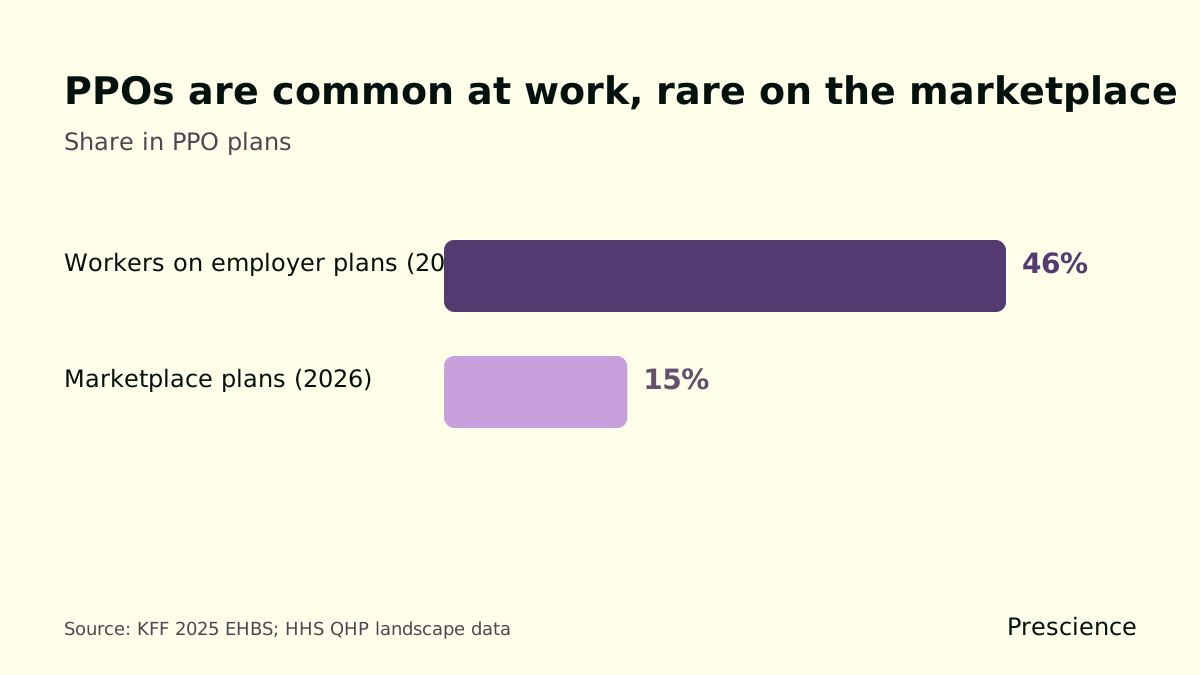
That's one reason I'm wary of moving teams to the individual market. About 46% of 2026 marketplace plans are HMOs and 33% are EPOs; only about 15% are PPOs.
Which to offer
- Distributed team or people with established doctors: a PPO.
- Everyone in one metro with a strong integrated system: an HMO can be good value.
- Budget-constrained but want some flexibility: an EPO with a broad network.
Prescience plans typically give members a broad national PPO network through the carrier, plus our direct-contract providers and a care team that helps people pick well.
See what your team would pay with Prescience
Answer a few questions about your team and get a quote in about 60 seconds, or talk it through with one of our benefits experts.