How ICHRA works
With an individual coverage HRA, the employer stops offering a group plan and instead gives each employee a monthly allowance. The employee buys an individual plan, usually on the ACA marketplace, and gets reimbursed tax-free up to the allowance. Federal rules have allowed this since 2020.
The math employees face
PeopleKeep's ICHRA report found small employers offered single employees an average allowance of $583 a month in 2025. Then ACA insurers raised premiums by about 26% on average for 2026, after the enhanced premium tax credits expired. An allowance set last year may now buy a thinner plan.
- Age. Individual plans can charge older adults up to three times what they charge a 21-year-old. The same allowance covers much less for a 55-year-old than a new grad.
- Families. Covering a spouse and kids on the individual market adds up fast, and dependent allowances are often thin.
- Deductibles. The average marketplace deductible rose from $2,759 in 2025 to $3,786 in 2026, and bronze sign-ups grew from 30% to 40% as people traded down.
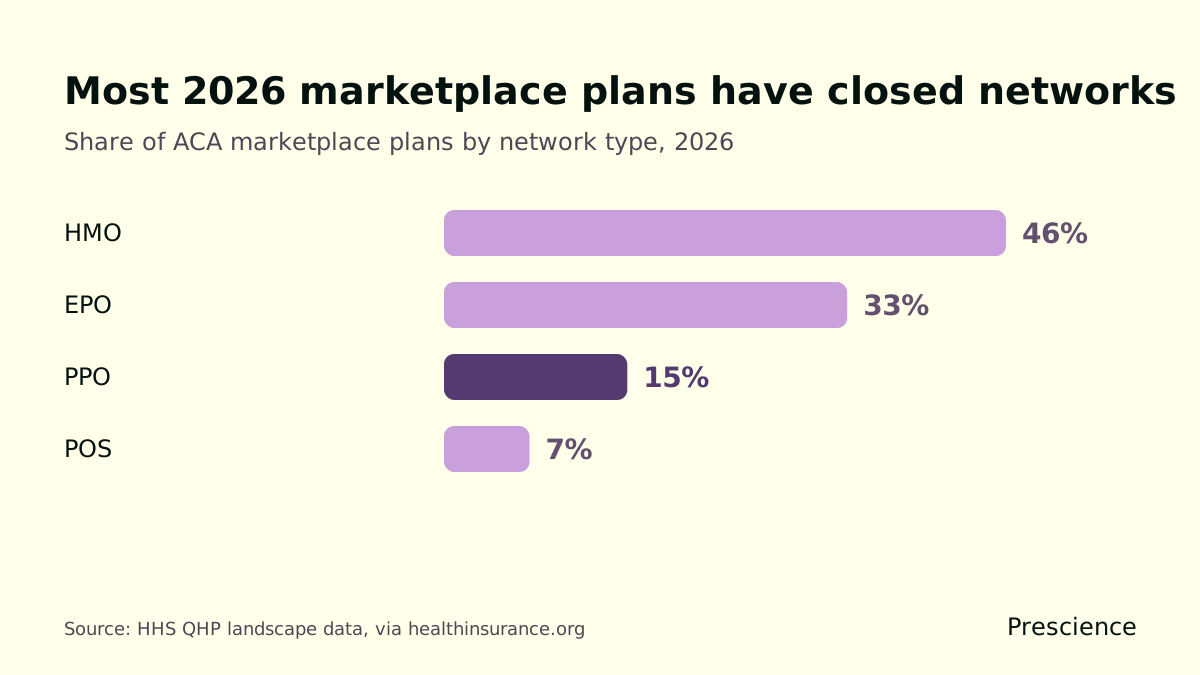
- Closed networks. About 79% of 2026 marketplace plans are HMOs or EPOs with no out-of-network coverage outside emergencies. On employer plans, PPOs are still the most common choice.
- Lost subsidies. If an ICHRA counts as affordable, the employee can't get premium tax credits, even if the allowance doesn't cover the plan they want.
Who ICHRA really works for
ICHRA works best for the employer's budget. Spending is capped, and future price increases land on employees. It also works for ICHRA platforms, which charge per enrolled employee per month; founders tell us platform margins run about $20–40 per employee, and Thatch publishes $45 plus a $50 monthly fee for small employers.
It can work for employees, too: young, single people in states with competitive individual markets, or teams spread across many states where a group network is genuinely hard. For everyone else, it shifts cost and complexity onto the people least equipped to handle it.
What I see as someone trained in medicine
The hardest part of healthcare isn't picking a plan. It's using it: finding a doctor who's in network, getting a referral, understanding a bill. In medical school I heard about a young dermatologist who asked an insurer what it would pay for a visit and was told to "just write down whatever you think is fair." If physicians can't get a straight answer, an employee alone on the individual market won't either. A good employer plan should come with people who help.
A better way to cap your costs
If what you want from ICHRA is a predictable cost, you can get that from a group plan too:
At Prescience, we design and run your company's health plan, from setup and enrollment to claims, compliance and COBRA. What your team gets:
- An effective $0 deductible, so the plan helps from the first visit.
- Simple copays shown before a visit, capped by a low out-of-pocket maximum.
- A broad national PPO network, plus providers we contract with directly.
- 24/7 physician-led care navigation: a care team that finds the right provider, books appointments and explains costs up front.
What your company gets: one monthly cost set in your quote, usually 10–20% below comparable fully insured coverage and fixed before the plan starts, with no admin fees. You keep your payroll provider, and the plan can start mid-year.
See what your team would pay with Prescience
Answer a few questions about your team and get a quote in about 60 seconds, or talk it through with one of our benefits experts.