How an HSA works
An HSA pairs with a high-deductible health plan (HDHP). You, your employer or both put money in. You spend it on qualified medical expenses, from doctor visits and prescriptions to dental and vision care, or you let it grow. The money is yours: it stays with you when you change jobs and never expires.
The tax treatment is why I call it the best account in the tax code. Contributions are pre-tax (or deductible), growth is tax-free and withdrawals for medical care are tax-free. No other account gets all three.
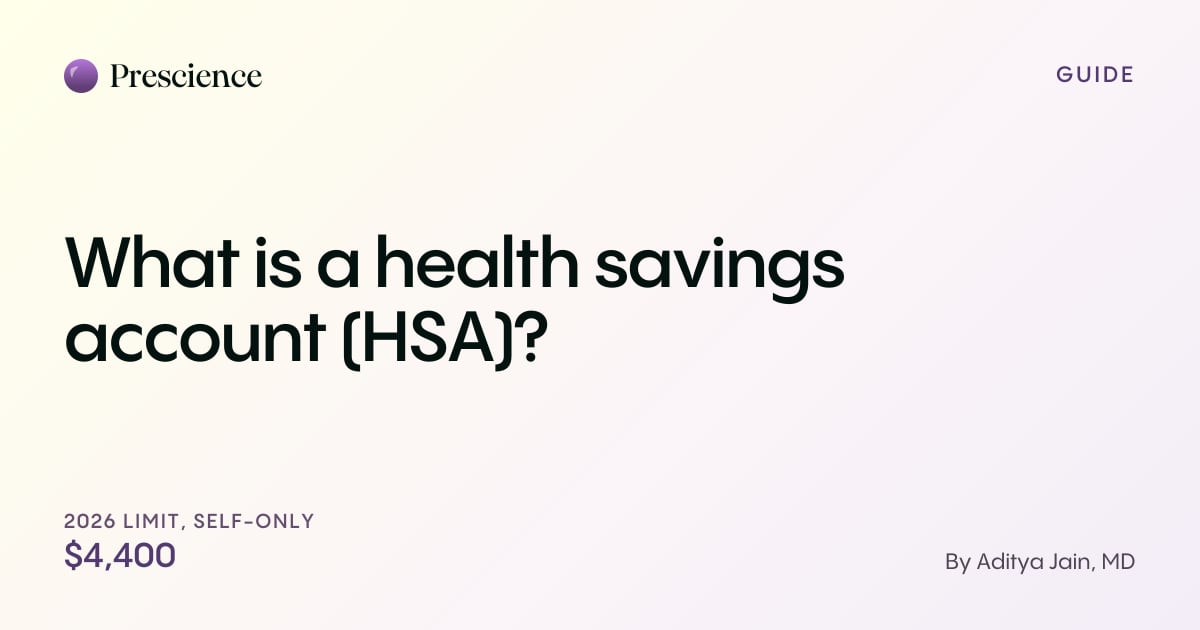
2026 HSA limits
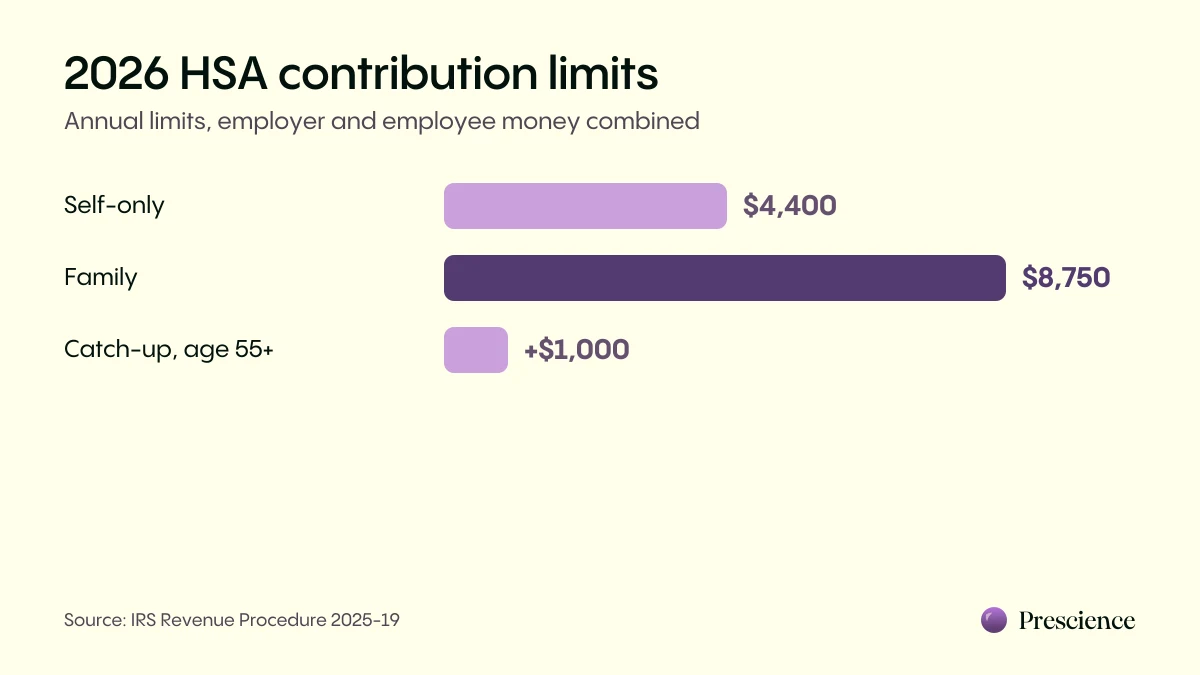
| Self-only | Family | |
|---|---|---|
| HSA contribution limit | $4,400 | $8,750 |
| Catch-up contribution, age 55+ | +$1,000 | +$1,000 |
| HDHP minimum deductible | $1,700 | $3,400 |
| HDHP out-of-pocket maximum | $8,500 | $17,000 |
Employer and employee contributions count toward the same limit.
What changed for 2026
The One, Big, Beautiful Bill Act widened HSA eligibility starting January 1, 2026:
- Bronze and catastrophic marketplace plans now count as HSA-compatible, even if they don't meet the usual HDHP definition.
- Direct primary care memberships no longer disqualify you, and you can pay the membership fee from your HSA.
- Telehealth before the deductible is permanently allowed without breaking HSA eligibility.
The catch: the deductible
To have an HSA, you need a plan with a real deductible, at least $1,700 for one person in 2026. For a young employee with $400 in the bank, that deductible is the reason they skip the MRI their doctor ordered. I've seen this in medicine over and over: people delay care because of a bill they can't predict, then show up sicker and more expensive later.
How employers can make the deductible disappear
Employers can contribute to employees' HSAs too, and those dollars can cover the deductible so employees don't feel it. Employer money in an HSA belongs to the employee, so it's a benefit people actually notice.
At Prescience, we design and run your company's health plan, from setup and enrollment to claims, compliance and COBRA. What your team gets:
- An effective $0 deductible, so the plan helps from the first visit.
- Simple copays shown before a visit, capped by a low out-of-pocket maximum.
- A broad national PPO network, plus providers we contract with directly.
- 24/7 physician-led care navigation: a care team that finds the right provider, books appointments and explains costs up front.
What your company gets: one monthly cost set in your quote, usually 10–20% below comparable fully insured coverage and fixed before the plan starts, with no admin fees. You keep your payroll provider, and the plan can start mid-year.
HSA vs. FSA vs. HRA
| HSA | Health FSA | HRA | |
|---|---|---|---|
| Who funds it | Employee and employer | Mostly employee | Employer only |
| Who owns it | Employee | Employer plan | Employer plan |
| Rolls over | Yes, forever | Limited carryover or grace period | Per plan design |
| Needs an HDHP | Yes (or an eligible bronze/catastrophic plan) | No | No |
| Can be invested | Yes | No | No |
See what your team would pay with Prescience
Answer a few questions about your team and get a quote in about 60 seconds, or talk it through with one of our benefits experts.